

Under 2L/100 km in real conditions: the incredible technical challenge by Citroën

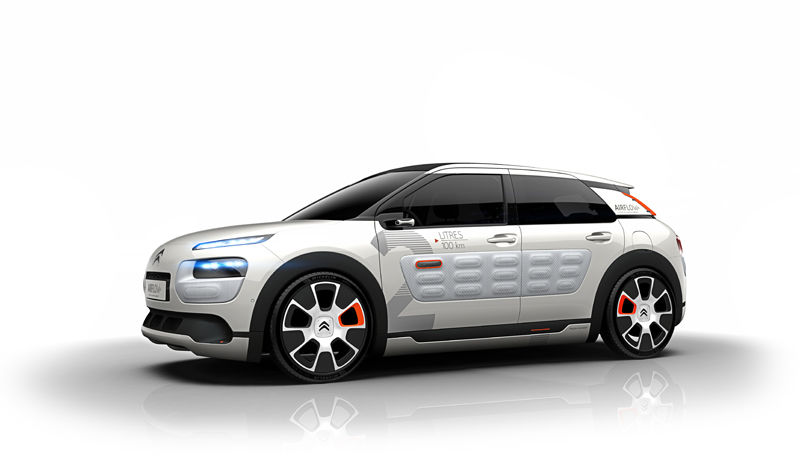
Welcome to our grand summer series dedicated entirely to the iconic records and innovations of the double chevron brand. This summer, "Passionnément Citroën" launches an exclusive new column to explore the most audacious technical challenges and avant-garde solutions that have defined the history of this extraordinary carmaker. Since its founding by André Citroën, the company has stood out for its perpetual quest for aerodynamic efficiency, a core identity trait historically harnessed to reduce fuel consumption and enhance ride comfort. This technological expertise has been proven time and again through decades of research, manifested in outstanding rolling laboratories. Among these modern engineering masterpieces, the C4 Cactus Airflow concept represents a brilliant demonstration of energy efficiency, adapting high-tech solutions into a compact crossover silhouette built for mainstream drivers.
Alternative energies: behind the scenes of the "2L/100 km Vehicle" state program
To fully understand the genesis of this ambitious project, one must examine the economic and environmental context of the automotive transition at the beginning of the previous decade. Long before the massive rise and legislative mandating of battery-electric powertrains, the global automotive industry and public authorities were actively mobilizing to reduce dependence on fossil fuels. The main goal was to limit the ecological footprint of personal transportation while protecting household budgets from the volatile prices of crude oil.
It was precisely within this framework of collaborative research, spurred by the French government's "2L/100 km Vehicle" program led by the Automotive Platform (PFA), that the C4 Cactus Airflow 2L project was born. Domestic manufacturers were challenged to devise industrial solutions capable of drastically reducing vehicle running costs in the medium term. Responding immediately to this call with its signature creativity, Citroën unveiled a technological manifesto at the 2014 Paris Motor Show. Developed using a recently launched production crossover as its foundation, this concept car was not a mere styling exercise, but a concrete, rational, and optimistic answer to the environmental challenges of its era.
Active and passive aerodynamics: a silhouette sculpted by fluid airflows
To transform the original silhouette of the production model and maximize air penetration, the brand's designers and engineers worked closely to reconcile bold styling with pure aerodynamic performance. The meticulous aerodynamic development focused on innovative solutions divided between variable geometry components and optimized fixed elements.
Regarding the moving parts, the revised front bumper features three controlled air intakes that operate dynamically based on vehicle usage, ensuring the ideal aperture to balance thermal engine cooling with smooth airflow. Mobile side deflectors installed behind the quarter panels guide the airflow around the car, while the 19-inch wheels feature mobile shutters activated and closed by centrifugal force as the vehicle gains speed.
On the fixed geometry side, the concept introduced latest-generation Tall&Narrow tires. These Michelin tires (155/70/R19) are very narrow yet large in diameter, improving overall fuel efficiency through ultra-low rolling resistance while enhancing ride comfort by absorbing road irregularities. An "Air Curtain" is integrated into the front wheel arches via slim vertical slots that channel the flow along the flanks. Finally, the rear spoiler was lengthened, a lower bumper extractor was integrated, traditional side mirrors were replaced by streamlined camera mirrors, and the underbody received full protective paneling. Highlighted by a technological orange hue contrasting with the pearlescent bodywork, these modifications yielded an overall aerodynamic gain of 20% compared to the production car, dropping the drag coefficient to an impressive SCx of 0.55 m².
A radical weight loss program: the multi-material structural revolution
Since optimizing body lines represents only one part of the equation, a drastic mass reduction was the second indispensable lever to achieve the target of 2 liters per 100 kilometers. The production Citroën C4 Cactus was already celebrated at launch for its virtuous, stripped-back design, saving an impressive 200 kilograms compared to a conventional Citroën C4 of that era. On this lightweight foundation, engineers achieved the feat of saving an additional 100 kilograms, even after accounting for the integration of the hybrid powertrain components.
This exceptional weight loss relied on exploring new structural materials and developing joining techniques entirely unprecedented in the automotive industry. The structural underbody benefited from a multi-material approach combining aluminum for the upper bulkhead, inner side members, and rear floor, with high-strength steels for the front rails and heel board. The front floor pan utilized advanced composite materials.
Beyond the internal structure engineered to absorb crash energy under the strictest safety standards, every component was methodically checked for weight. Carbon-based composites were selected for the suspension springs, tailgate, rear bench seat, body sides, full roof, roof crossmembers, wings, and door panels. Even the famous Airbump® side protectors integrated carbon fibers to reduce mass while maintaining their protective properties. Finally, adopting a panoramic roof made of translucent polycarbonate instead of traditional multilayer glass and thinning the exhaust pipe walls contained the total curb weight to just 865 kilograms.
The Hybrid Air technological breakthrough: compressed air as a virtuous ally
To propel this unique rolling laboratory, Citroën implemented a breakthrough powertrain unveiled by the PSA Group: Hybrid Air technology. While the production model already delivered class-leading fuel economy with its PureTech and BlueHDi engines, this concept paired a three-cylinder gasoline engine with a compressed air energy storage system. This original mechanical layout combined the 82-horsepower engine with two composite pressure tanks located at the rear, two hydraulic motor-pumps, and an automatic planetary gear transmission.
An electronic supervisor managed driver demands to optimize energy consumption across three distinct operating modes:
An Air mode (zero-emission), where stored compressed air expanded to power the hydraulic motors, driving the vehicle in urban environments without consuming a single drop of fuel.
A gasoline mode, where the PureTech thermal engine handled propulsion on highways.
A combined mode, which pooled the power of the gas engine and the compressed air energy during heavy acceleration.
The three-cylinder engine received specific optimizations to maximize its thermal efficiency. Internal friction losses were cut by 20% using a specialized Diamond-Like Carbon coating on moving components, lightweighting rotating parts, and incorporating roller bearings. Combined with polymer bearings and ultra-low viscosity oil, overall engine efficiency increased by 5%.
The integration of Hybrid Air technology alone cut fuel consumption by 30%. Data analysis from the concept proves that this 2L/100 km achievement was a systemic success: 30% came from the pneumatic hybrid setup, 20% was tied directly to aerodynamic design optimization, the 100 kg weight reduction contributed significantly, and the low rolling resistance tires completed the equation.
In conclusion, Citroën surprised automotive observers in 2014 by providing irrefutable proof that the ambitious objective set by the PFA could be reached through a holistic approach to vehicle architecture. By simultaneously addressing active aerodynamics, structural weight reduction, and powertrain innovation, the brand paved a clear way forward for a new generation of eco-responsible internal combustion vehicles.
Twelve years after that historic unveiling, the automotive market has radically shifted its paradigm under the pressure of European regulations mandating a transition toward massive and forced electrification. The political choices imposed on the industry unfortunately put an end to the pragmatic engineering principles championed by the C4 Cactus Airflow and its Hybrid Air technology. Yet, at a time when the weight of electric cars and the high cost of batteries penalize personal mobility, the lightweighting and efficiency solutions developed for this concept would have undoubtedly offered a viable alternative, creating a true family car that was resource-efficient and truly affordable for the general public.


Comments