

Record: How Citroën built a 117 MPG car back in the 1980s

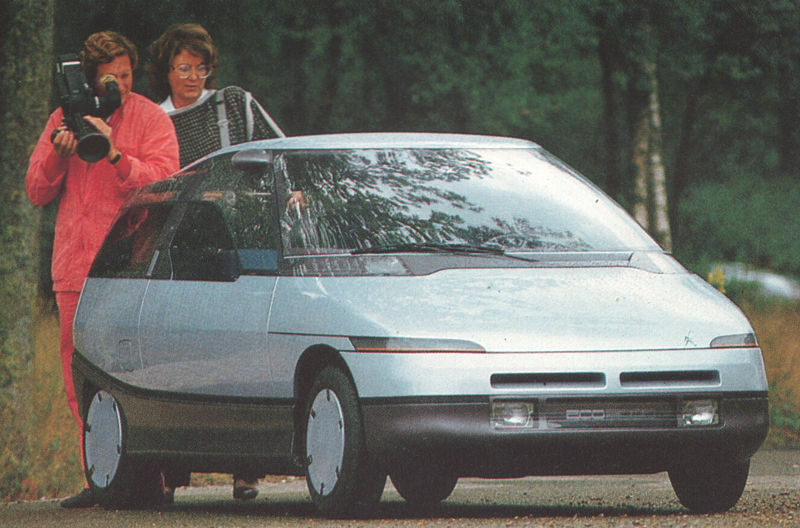
Citroën ECO 2000: when aerodynamics led the quest for 2L/100km
Welcome to this new summer series dedicated to the fuel consumption records that have shaped automotive history. To kick off this series, it is impossible not to look at the very core of Citroën’s DNA: its deep relationship with aerodynamics. For decades, this pursuit of streamlined design has allowed for reduced drag and, consequently, lower fuel consumption—a philosophy that remains evident in today’s vehicle lineup. Among the brand’s most ambitious projects, the ECO 2000 program stands out as a major technological response to a specific request from the French government at the time.
The 1979 context: the ambition for a 2-liter car
In 1979, France, like the rest of the world, was emerging from another major energy crisis. The oil shocks of the 1970s acted as a catalyst, radically changing consumer habits and forcing manufacturers to rethink their strategies. Faced with skyrocketing oil prices, public authorities decided to fund an ambitious research program to produce extremely fuel-efficient vehicles. This led the Energy Savings Agency (now known as ADEME) to initiate the VERA program.
At that time, achieving fuel consumption of 4 liters per 100 km (approx. 58 MPG) was already considered a remarkable feat, reserved for a few rare concept cars. However, Citroën, true to its pioneering spirit, wanted to go one step further by aiming for the mythical threshold of 2 liters per 100 km (approx. 117 MPG). This project, 50% funded by the French State, was not merely an improvement of existing models but a fundamental study on global vehicle optimization.
The three pillars of efficiency: aerodynamics, weight reduction, and engine
To reach this objective—which was almost utopian for the era—Citroën engineers worked simultaneously on three main research axes: reducing air resistance, decreasing weight, and optimizing engines.
Aerodynamics was the spearhead of the project. Citroën leveraged over 50 years of expertise to refine vehicle shapes. No fewer than 48 scale models (1/5) were built, undergoing more than 1,500 wind tunnel tests, notably at the St-Cyr facility. The goal was to reduce cooling drag and ensure perfect surface continuity. This resulted in the adoption of flush windows, a bonded windshield, the removal of drip rails, and a fully faired underbody. These efforts culminated in an exceptional drag coefficient (Cd) of 0.21 to 0.22.
Weight reduction was the second major challenge. Mass reduction was primarily achieved through a drastic simplification of the vehicle structure. While a Citroën GSA consisted of 288 structural parts, the ECO 2000 used only 85. The massive use of synthetic materials, such as epoxy, and the use of computer-aided design to optimize weight distribution allowed the structural weight to drop to 27 kg/m² of ground projection, compared to 32.4 kg/m² for a BX. Ultimately, the prototype weighed only 450 kg (992 lbs).
Finally, engine optimization completed the package. Engineers sought to reduce mechanical and thermal losses. Various solutions were tested, including a two-cylinder air-cooled engine for the first prototype, before moving toward a small 750 cc three-cylinder engine developing 35 hp. This unit, featuring fully electronic ignition, allowed for top speeds of 140 km/h (87 mph) while remaining extremely fuel-efficient.
Le concept SA117
The evolution of prototypes: from SA 103 to the final SL 10
The ECO 2000 program was realized through several research prototypes built between 1982 and 1984, each marking a step in the concept's evolution.
SA 103 (March 1982): This first prototype was a two-door monocoque sedan. At 3.04 meters long, it weighed just 430 kg. Its unique feature was a rear-mounted twin-cylinder engine. Although its Cd was 0.26, it suffered from poor interior space and soundproofing.
SA 117 (March 1983): Closer to production standards, this model offered better performance and increased roominess. It transitioned to a front-engine, front-wheel-drive architecture while maintaining a lightweight synthetic structure.
SA 109 (March 1984): This prototype represented the best compromise between comfort, space, and economy. Measuring 3.47 meters long, it featured hydropneumatic suspension with speed-sensitive electronic height control. With this version, Citroën validated fuel consumption of 2.4 liters per 100 km at a steady speed of 90 km/h (approx. 98 MPG).
SL 10: Presented at the 1984 Paris Motor Show, this "dream car" mock-up embodied the final stylistic vision of the project, foreshadowing the brand's future.
A lasting technical legacy for the future
Building a car that consumed only 2 liters per 100 km in the early 1980s was a colossal technical challenge that Citroën successfully met with the support of public authorities. The ECO 2000 program proved that it was possible to reconcile aerodynamics, aesthetics, and roominess without sacrificing the bold stylistic flair inherent to the brand.
The legacy of this work is immense. These research efforts directly led to the birth of the Citroën AX in 1986, which became the fuel efficiency champion of its time thanks to its lightness and aerodynamic finesse. Even today, the spirit of the ECO 2000 lives on in the Citroën lineup, most notably with the AMI. The latter revisits the concept of reducing the number of parts and structural simplification to offer efficient and accessible mobility.


Comments