

[Citroëns at the ends of the earth] Why did the Citroën 2CV become the 3CV in Argentina?

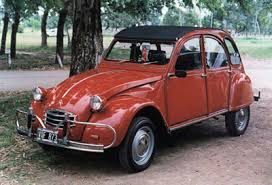
Citroën 3CV: when the argentine version outperformed the French 2CV
Welcome to this new installment of our series on Citroëns from around the world. While the Citroën 2CV is an undisputed icon in Europe, it led an equally fascinating parallel life in Latin America. In Argentina, it mutated to become the Citroën 3CV. Behind this commercial name, which strictly followed the engine's fiscal horsepower at the time, lay a car that was much faster and more modern than the original model designed before the Second World War.
A transformed engine for the argentine wilderness
The industrial adventure began in 1960 with local production that was nearly identical to European standards. However, the demands of the Argentine terrain and the quest for performance soon pushed the local subsidiary to offer significant improvements. Under the hood of the Citroën 3CV was a 602 cc block developing 32 hp. In comparison, the European 2CV often settled for a modest 425 cc engine with only 18 horsepower. Interestingly, even the famous 2CV driven by James Bond in For Your Eyes Only had to cheat by using a 55 hp 1,015 cc GS engine.
This extra power allowed the 3CV to reach a top speed of 120 km/h, about 20 km/h more than its French cousin. To support this increased performance, Citroën Argentina had to adapt the peripherals. The electrical system swapped the dynamo and 6V circuit for a modern 12V alternator. This modification was not a luxury; it significantly increased the range of the headlights, which were essential for night driving on poorly lit roads. The driver could even adjust the headlight alignment directly from the cabin, a welcome comfort for the time.
Road handling adapted to the pampa
The Argentine landscape, characterized by bumpy tracks and vast stretches, demanded unwavering robustness. Engineers therefore deeply reworked the chassis. The Citroën 3CV's suspension was reinforced, abandoning the 2CV's classic friction dampers in favor of hydraulic elements on each wheel. Complemented by larger diameter shock absorbers and much stiffer springs, this setup transformed the car's behavior. The 3CV leaned significantly less, offering stability and driving precision unknown on the original French model.
This improved handling was also aided by the adoption of wider tires, increasing from 125 mm to 135 mm. Inside, comfort was also improved. The traditional floor-mounted pedals were replaced by modern suspended pedals, which were much more ergonomic. To protect the bodywork from the bumps of local vehicles, which were often taller and heavier, the Argentine 3CVs were fitted with specific bumpers protecting the fenders and hood. These features earned it the affectionate nickname "Rana" (the frog) from the Argentine public.
Design and practicality: the hatchback France never had
Aesthetically, the 3CV retained the 2CV's general silhouette but was full of exclusive details. One of the most striking differences was the door opening. Faithful to the early models, the 3CV kept "suicide" front doors (hinged at the rear) long after European models had adopted conventional hinges. Other features included an exhaust outlet located just before the rear left wheel and rear windows that could roll down into the door—a ventilation luxury for southern summers.
But the real stroke of genius was at the back. Long before the solution became standard on modern city cars, the Citroën 3CV offered a true hatchback that included the rear window, much like a Renault 4. This feature provided exceptional modularity for transporting goods, whereas the French 2CV had to make do with a small fixed trunk. Even the convertible top was more sophisticated, with a mechanism allowing it to be opened in three positions directly from inside the cabin. Despite these assets, the official Citroën 3CV adventure ended in 1972, before the industrial destiny took a complex geopolitical turn.

The IES legacy and the forced transition of the 1980s
Citroën's official departure in 1980 did not mean the death of the model. Following tensions related to the Falklands War in 1982, the confiscated factory was handed over to Industrias Eduardo Sal-Lari (IES). It was under this new banner that the 3CV platform underwent its final evolutions. IES had to show incredible ingenuity to compensate for the lack of original French parts.
Under the IES era, the 3CV mutated into the IES Super America. This model pushed modernization even further with a radically different double-wishbone suspension and an enlarged windshield for better visibility. The range even expanded with the Carga America, a robust utility vehicle, and the Gringo, a small off-roader with a fiberglass body and an engine bored out to 635 cc. These variants, born of necessity and extraordinary industrial resilience, allowed the 2CV concept to survive and thrive in Argentina until the end of the 1980s.
Conclusion: A masterful reinterpretation
The epic story of the Citroën 2CV in Argentina demonstrates an exceptional capacity for adaptation. From the birth of the powerful and versatile 3CV to the bold reinterpretations by IES, the model evolved to meet the specific needs of a demanding country. By integrating modern features like the hatchback or the 12V system, Argentina gave the "Deuche" a second youth, creating specific versions that collectors around the world still admire today. The "Rana" is not just a Citroën from the other side of the world; it is proof that an icon never truly dies when it knows how to reinvent itself.


Comments