

Citroën ë-Méhari (2016-2019): The history of the forgotten electric cabriolet

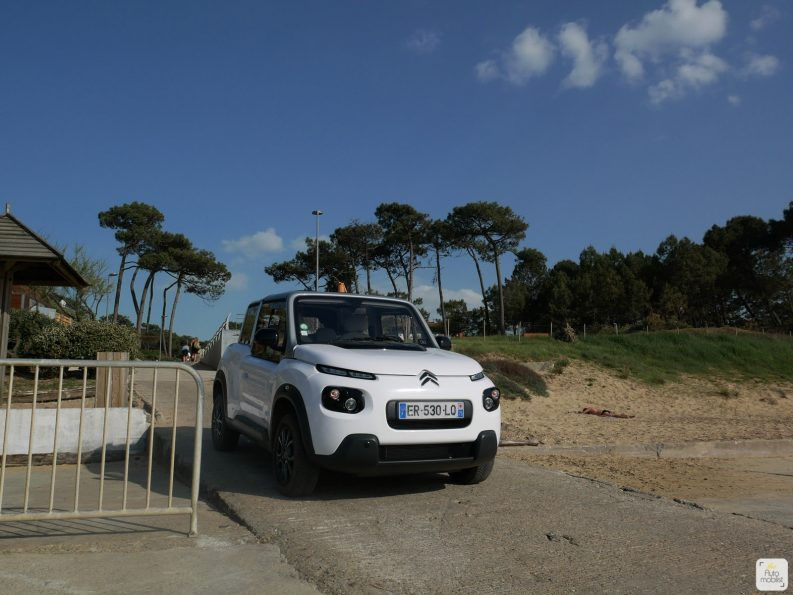
The year 2026 brings a key milestone for automotive history enthusiasts, offering a perfect opportunity to continue our exclusive editorial series dedicated to the major anniversaries of the double-chevron brand. While some models instantly evoke mass popularity or pure commercial genius, the vehicle we are examining today holds a unique position at the intersection of stylistic boldness and industrial experimentation. Ten years ago, the French manufacturer took a daring gamble by reviving one of its absolute legends in an entirely unprecedented form. The Citroën ë-Méhari, launched commercially in 2016, stood out as one of the most unconventional shapes of the 2010s. Designed to embody a modern, playful, zero-emission vision of the famous 1968 leisure vehicle, this electric variant masked a complex engineering reality beneath its colorful plastic bodywork. By pairing a refreshing retro-modern silhouette with a battery technology that was already highly controversial at the time, the brand delivered a deeply paradoxical vehicle that remains a fascinating case study a decade later.
The genesis of the ë-Méhari: a clever strategy to fill the product gap
To understand how such an unconventional project received green-light approval from top management, one must look back at the brand's strategic context in the mid-2010s. At that time, the vehicle release calendar was going through a delicate transitional phase, characterized by a temporary lack of new volume models in showrooms. The third-generation C3 city car was not scheduled to arrive until November 2016, while the major SUV product offensive—later led by the C3 Aircross and C5 Aircross—was still in its early engineering phases. In order to maintain crucial media visibility and keep foot traffic high at dealerships, corporate leadership sought an agile, fast-to-market solution.
The opportunity came through an unexpected industrial partnership with the Bolloré Group. On July 10, 2015, PSA formalized a major strategic agreement with the French industrial company to distribute and build an existing electric cabriolet, the Bolloré Bluesummer. The deal integrated the production of this model into the historic PSA manufacturing facility in Rennes-La Janais, a site actively seeking additional assembly volume. Design teams quickly recognized the marketing potential of this technical package: by deeply reshaping the Bluesummer's lines, they could tap into the immense public affection for the iconic 1968 Méhari.
The project was fast-tracked under the leadership of designer Pierre Authier, a well-known figure within the company for his work on several contemporary production cars. In record time, the design teams successfully adapted the brand's current visual identity onto the Bolloré tubular structure. The final car debuted in December 2015 during the COP21 climate conference in Paris, an ideal symbolic setting to showcase an eco-friendly vehicle. By applying the "ë" prefix, which now identifies all electrified products from the manufacturer, Citroën officially marked the birth of the ë-Méhari, bringing a legendary name back to life after nearly thirty years of absence.
From the 1968 icon to the modern version: specs and technical paradoxes
Conceptually, the spiritual connection to the 1968 ancestor was heavily highlighted by marketing departments. Designers scrupulously preserved the core values of the original car: a philosophy entirely focused on leisure, an open-top architecture, the use of vacuum-formed plastic body panels colored in the mass, and a fully hose-out washable interior. The launch color combinations were intentionally vibrant, emphasizing a sense of freedom with choices like Mechanical Orange, Grand Blue, or Submarine Yellow, paired with removable canvas tops and waterproof faux-leather cabin upholstery. The car targeted a very specific niche audience, including coastal holiday homeowners, premium resorts, and car rental agencies in seaside destinations.
However, beneath this apparent family resemblance, the structural differences were massive. Unlike its ancestor, which relied on the ultra-light and affordable 2CV platform, the modern version featured a heavy steel chassis sourced from Bolloré that raised the vehicle's weight considerably. The powertrain swapped the historic air-cooled twin-cylinder engine for a 50 kW (68 hp) electric motor delivering an instant 166 Nm of torque. While urban performance was adequate, with 0 to 50 km/h completed in 6.4 seconds, top speed peaked at a modest 110 km/h (68 mph), effectively preventing prolonged highway travel.
The ultimate Achilles' heel of the vehicle lay in its energy storage choice. The car utilized a 30 kWh Lithium Metal Polymer (LMP) battery, an exclusive technology developed by Bolloré's subsidiaries. Although it promised a theoretical driving range of 200 kilometers under the NEDC certification cycle of the era, this battery chemistry introduced a major operational constraint that proved unacceptable to mainstream buyers: it required its internal temperature to be permanently maintained at around 180°C (356°F). To prevent the battery from cooling down and suffering irreversible structural damage, the car had to remain plugged into a charging station whenever parked. If left unplugged, the battery pack consumed its own stored energy to keep itself warm, causing rapid self-discharge known as "vampire drain." This significant technical requirement quickly alienated the vast majority of potential retail buyers.
A short-lived career driven by exclusivity and market reality
In response to immediate criticism from automotive journalists and early adopters regarding the sparse comfort levels and battery complexity, management updated the vehicle at the Brussels Motor Show in January 2018. The manufacturer introduced a comprehensive mid-cycle refresh. This update brought a thoroughly redesigned dashboard matching the principles of the Citroën Advanced Comfort program, more supportive seats, and significantly improved acoustic insulation. Most importantly, the line-up added a brand-new Hard Top variant, featuring fixed side windows and a removable rigid roof panel, transforming the seasonal open cabriolet into a small all-weather urban vehicle capable of handling winter conditions.
To support sales momentum, the brand also leveraged high-profile, low-volume special editions. In 2017, a collaboration with a famous fashion house led to the ë-Méhari Styled by Courrèges, an exclusive version limited to just 61 units. Finished in an elegant, all-white exterior livery with bespoke white leather interior detailing, it attempted to position the vehicle within the world of Parisian high fashion. The following year, to celebrate the 50th anniversary of the original Méhari, designer Jean-Charles de Castelbajac created an official Art Car. It featured a bold, colorful graphic pattern utilizing the artist's signature primary colors, re-emphasizing the vehicle's intended role as a pop culture icon.
Despite these genuine efforts and an undeniable charm, the commercial performance remained weak. The vehicle suffered from a high retail price, made worse by early requirements to lease the battery pack on top of the car's purchase price. The ownership complexities caused by the LMP technology limited its practical usability outside of coastal towns with dedicated charging infrastructures. Realizing that sales numbers would remain minimal, management made the logical decision to end production in early 2019. While initial plans targeted a build rate of 1,000 units per year, total production reached approximately 1,000 units across its entire three-year lifecycle. The brand chose to redirect its capital toward its high-volume electrification strategy, later characterized by the Ami urban mobility solution and the ë-C4 hatchback.
When reviewing its history on this tenth anniversary in 2026, it is clear that the Citroën ë-Méhari did not enter collective automotive history as a pinnacle of refinement or a massive commercial triumph. The clear mismatch between its LMP battery technology and the daily realities of car ownership quickly dampened buyers' expectations, leaving behind the memory of an appealing concept hampered by restrictive engineering. Nevertheless, it retains the permanent historical distinction of being the first series-production all-electric car sold by Citroën at the dawn of the modern EV era. Ten years later, this imperfect milestone reminds us that the road to innovation is built on bold experiments, which today bring joy to a dedicated group of collectors who appreciate rare and unusual chapters of the double-chevron heritage.


Comments