

Citroën Baby Brousse: the story of the mythic african Citroën from Abidjan

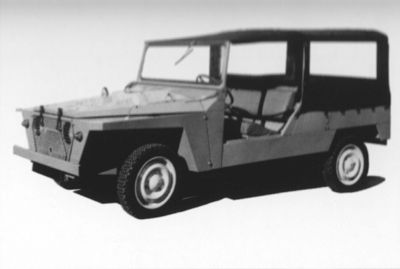
The history of Citroen has been written in every corner of the planet, often where paved roads end and true adventure begins. As part of our exclusive series dedicated to "Citroens from the Edge of the World," following our exploration of the unique features and popular success of the legendary 3CV in Argentina, our journey now takes us to the African continent. It is in West Africa that we discover an extraordinary mechanical variant that experienced a fundamentally different destiny compared to the brand's other productions. A true icon of resourcefulness and pragmatism, this singular automobile did not come to life under the neon lights of Parisian design bureaus, but under the blazing sun of Ivorian tracks. This separate existence, dictated by the urgency of local conditions, was crowned by unexpected international recognition that would ultimately reshape the French manufacturer's global strategy.
The birth of the Baby Brousse: The Ivorian genius of the Ateliers et Forges de l’Ebrié
To understand the genesis of this incredible automobile, one must travel back to the very beginning of the 1960s in Abidjan, the economic capital of Ivory Coast. The country, in a dynamic post-independence development phase, suffered from a glaring lack of light, robust, and above all, affordable transport vehicles for the local population and craftsmen. In this context, two French entrepreneurs settled there, Messieurs Letoquin and Lechanteur, owners of the Ateliers et Forges de l'Ebrié, decided to take on a major challenge: to design a machine capable of withstanding the worst African tracks without requiring the infrastructure of a heavy steel mill.
Rather than designing a powertrain from scratch, which would have been impossible, they turned to the most proven technical base of the era: that of the Citroen Ami 6, which later gave way to components from the famous 2CV. The core idea lay in an extreme simplification of the manufacturing process. The two inventors devised a body made entirely of folded sheet metal, assembled in a completely artisanal manner without any complex welding. The metal panels were simply cut, bent using basic machinery, and then securely fixed together by bolting.
This surprisingly simple manufacturing method made it possible to bypass the expensive stamping presses essential to the traditional automotive industry. The result was a small, four-seater utility and family vehicle, featuring open sides to cope with tropical heat and a folding windshield. The Baby Brousse was born. Its production started in 1963, paving the way for a commercial career whose exact numbers are still debated today among automotive historians: while official Citroen archives conservatively mention only 1,320 units assembled in Abidjan, other specialized sources and local registries estimate global production at more than 31,000 units until production ceased in 1979.

A deceptive kinship: why the Baby Brousse has nothing to do with the Mehari
At first glance, the angular and minimalist silhouette of the Baby Brousse immediately evokes that of the famous Citroen Mehari, introduced in France in May 1968. This striking aesthetic similarity frequently generates a stubborn confusion among classic car enthusiasts, who wrongly consider the African version to be a simple local copy or a late derivative of the European beach favorite. However, the actual chronology and technical choices demonstrate the exact opposite, making the Ivorian creation a true spiritual predecessor.
The fundamental difference lies above all in the materials used and the industrial purpose of each project. While the official Mehari utilizes a thermoformed body made of ABS plastic (acrylonitrile butadiene styrene) dyed in the mass, the Baby Brousse relies exclusively on folded steel. This choice of material is not just a design detail; it defines two completely different worldviews. The Mehari's ABS requires high-tech industrial facilities for molding and proves particularly difficult to repair outside specialized factory networks. Conversely, the metallic structure of the Abidjan car was designed to be straightened with a hammer by any village blacksmith, guaranteeing exceptional longevity in isolated regions.
Furthermore, the initial status of these two vehicles sets them radically apart. The Mehari was an official project of the Parisian management, originally conceived by Count Roland de La Poype for leisure, beach life, and Sunday drives on the French coast. The Baby Brousse, on the other hand, was the fruit of a purely private initiative, born from the absolute necessity to work, transport goods, and connect communities over dirt tracks that were sometimes impassable. Where the French car sought casual relaxation, the Ivorian model established itself through raw robustness and an uncompromising utilitarian vocation.
From Ivory coast to the international stage: The Citroën takeover and the FAF heritage
Faced with the growing success and undeniable robustness of the concept on the ground, Citroen's general management in Paris soon took a very close interest in this regional invention. Far from dismissing this artisanal initiative that used its own mechanical components, the manufacturer immediately perceived the strategic potential of such a vehicle to penetrate emerging markets in developing countries. In 1969, Citroen took the plunge and officially bought the license for the Baby Brousse from the Ateliers et Forges de l'Ebrié.
The objective behind this acquisition was clear: to standardize the concept in order to deploy it internationally as a low-cost vehicle program, easy to assemble locally from mechanical parts kits shipped from France. This visionary decision gave rise to a fantastic and unique international lineage, tailored to the specific needs of each host country. This led to the emergence of the Dalat in Vietnam, which enjoyed immense popular success with over 5,000 units produced, the Jiane Mehari in Iran with more than 9,000 units, as well as the Yagan in Chile and the famous Pony in Greece, a Hellenic best-seller that sold nearly 17,000 units.
This decentralized approach reached its technical and marketing pinnacle in the late 1970s with the official launch of the FAF (Easy to Manufacture, Easy to Finance) program. Directly inspired by the construction logic of the Baby Brousse, the FAF concept consisted of supplying local governments or industrialists with the engine elements and chassis, while leaving them to cut and assemble the flat sheet metal body according to their own resources. The small car born in Abidjan thus became the trailblazer for an inclusive globalization strategy, proving that technical simplicity could provide a universal answer to the mobility needs of multiple continents.
The Citroen Baby Brousse remains an absolutely fascinating case study in the history of the modern automotive industry. It embodies the quintessence of the "Citroen from the Edge of the World," a vehicle whose DNA was not dictated by the rigid standards of metropolitan engineers, but entirely shaped by and for the demanding realities of the African terrain. By recognizing the economic relevance and robustness of this project born in Abidjan, the brand showed a tremendous openness of mind. By acquiring this license to distribute it globally, the manufacturer significantly strengthened its presence and credibility in emerging regions of the world, transforming an Ivorian work tool into a bold lineage of universal vehicles.


Comments