

Citroën Aircross (2016): how Brazil transformed the C3 Picasso into a SUV

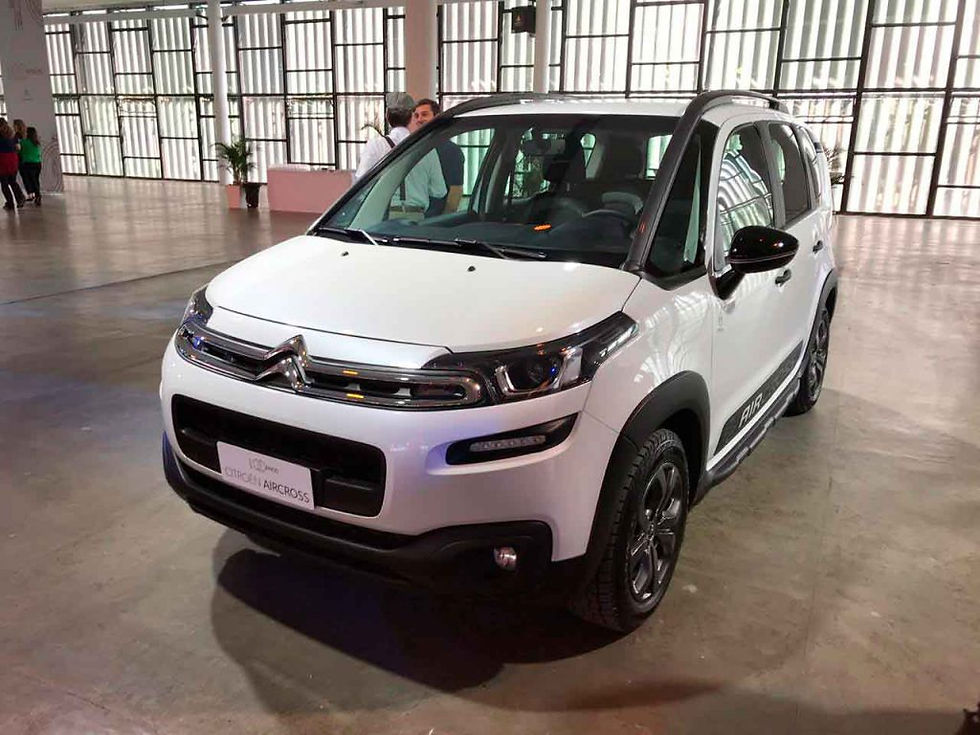
To conclude our summer series dedicated to Citroen from the edge of the world, we are heading to South America to rediscover a model with a truly unique history: the Citroen C3 Aircross launched in Brazil. Although its initial silhouette closely resembled the C3 Picasso sold in Europe, this vehicle quickly chose a radically different technical and aesthetic path. Far from being a mere exotic variation, it transformed itself to adapt to local demands, even dropping part of its name during a major facelift in 2016. Let us look back at the birth and evolution of an urban adventurer born to break away from European boundaries.
From C3 Picasso to C3 Aircross: the south american genesis
The history of this model truly began in 2010 in the Brazilian market. At that time, Citroen was looking to capitalize on the success of the first-generation Citroen C3, which had been introduced locally in 2003. While Europe was embracing the compact MPV format with the C3 Picasso, the South American subsidiary anticipated the wave of high-riding vehicles. This led to the birth of the Citroen C3 Aircross, a derivative with strong rugged accents, hitting the market a year before the local civilian version of the C3 Picasso in 2011.
Visually, the Brazilian model stood out immediately with specific features designed to appeal to a clientele fond of outdoor adventure. While the central body remained identical to the European model, the integration of raw plastic cladding, an increased ground clearance, and longitudinal roof bars radically transformed its stance. The most iconic element of this metamorphosis was undoubtedly the external spare wheel, mounted directly on the tailgate via a specific hinged support. This strong visual signature gave the small vehicle an authentic off-road flavor, essential for competing against an aggressive local market.
Underneath this adventurous body, the technical specifications were quite different from European standards. The model, produced at the Porto Real plant in the state of Rio de Janeiro, was based on an adaptation of the PF1 platform. Engineers extensively revised the chassis and suspension to handle the demanding road conditions of Latin America. Reinforced shock absorbers, specific springs, and optimized approach angles allowed the vehicle to cope with damaged roads and high speed bumps, while preserving the legendary ride comfort of the double chevron brand.
The 2016 pivot: when C3 Aircross became simply Aircross
The true turning point of its career came at the end of 2015, for the 2016 model year. The global automotive landscape was undergoing a profound shift, as traditional MPVs rapidly lost ground to urban SUVs. For Citroen, the objective was twofold. The brand needed to modernize a vehicle that had sold over 110,000 units since its launch, while also simplifying the lineup. The manufacturer decided to stop selling the classic C3 Picasso in Brazil, leaving the high-riding version to cover the entire segment, including new entry-level trims.
The aesthetic facelift was exceptionally deep for a mid-life update. The front end abandoned its original rounded shapes to adopt the brand's new global design language, which had been introduced in Europe by the C4 Picasso. It featured a slim grille connecting thinner headlights, underlined by LED daytime running lights integrated into a completely redesigned bumper. This new front end gave the vehicle a much more technological and premium road presence.
At the rear, the updates aimed to streamline vehicle usage while refining its style. The taillights received a new smoked treatment, and the bumpers integrated new protective elements. The most significant change involved the famous external spare wheel. Responding to feedback from an increasingly urban customer base who found this feature cumbersome during parking maneuvers, Citroen chose to remove it from the entry-level versions. However, it remained available on the high-end trims to preserve the model's original spirit. On this occasion, the brand simplified its commercial name: the vehicle dropped its prefix to become simply the Citroen Aircross, avoiding any confusion with the upcoming European SUV then under development.
An interior revolution driven by market demands
The 2016 modernization effort did not stop at the cabin doors. The interior of the Citroen Aircross benefited from a complete redesign of its dashboard, aimed at increasing perceived quality and closing the technology gap against a renewed field of competitors. The original bulky lines made way for a more horizontal design, integrating new climate controls and higher-quality materials that brought the interior atmosphere closer to contemporary European standards.
Connectivity became the spearhead of this update with the introduction of a 7-inch touchscreen infotainment system. This system included the MirrorLink function for the first time, which was essential for attracting a young and connected customer base, as well as a rearview camera to assist with city driving. The electric power steering was also optimized to offer smoother handling in the heavy traffic of major South American metropolises.
On the mechanical side, the Aircross retained proven solutions perfectly suited to local conditions. Diesel engines were completely absent from this segment in Brazil. The range focused on two Flex Fuel engines, capable of running on either gasoline or ethanol. The entry-level model featured a 1.5 Flex engine producing between 89 and 93 horsepower, paired with a manual gearbox. Higher trims relied on the 1.6 VTi Flex engine, delivering between 115 and 122 horsepower depending on the fuel used, mated to a four-speed automatic transmission.
This major strategic and technical shift also found its roots behind the scenes of industrial development. According to persistent rumors at the time, early clinic tests conducted in Brazil with the proposed next-generation European C3 and C3 Aircross did not generate enthusiasm among local customer panels. Faced with this mixed feedback, management preferred to extensively update the existing local technical base, a pragmatic decision that allowed the Aircross to continue its successful career until 2020.
In the span of just a decade, the Brazilian automotive landscape has completely transformed. SUVs have conquered almost the entire market, pushing MPVs into the past. While competition has intensified dramatically with the arrival of new global players, Citroen maintains its historical presence in this strategic territory by continuing to offer a model named Aircross. Although the current generation relies on very different global industrial synergies and does not quite match the exceptional sales volume achieved by the bold version born from the 2016 facelift, it still holds a special place for brand enthusiasts. It remains the symbol of an era when regional creativity and technical adaptation allowed Citroen to offer truly unique vehicles, perfectly built for the edge of the world.


Comments